Why Water Waste Numbers Matter More Than You Think
The dollar impact of a hidden leak depends on your local water rate. At the national average of roughly $4.00 per 1,000 gallons, a 100-gallon-per-day slab leak adds approximately $146 per year in wasted water. In high-cost water markets — Phoenix, Los Angeles, San Diego — that number is two to three times higher. And the water bill is only part of the cost.
The structural damage the water is causing the entire time is what creates the real financial exposure. A slab supply line losing 100 gallons per day introduces approximately 100 gallons into the sub-slab soil every 24 hours. In expansive clay soils, this causes measurable soil swelling and differential foundation movement within weeks. The foundation repair that results from months of undetected leaking routinely costs more than the leak detection and pipe repair combined — often by a factor of 10 or more.
Water Waste by Leak Type: Real Numbers
These ranges reflect field data and EPA estimates across common residential leak scenarios:
- Dripping faucet (1 drip/second) — Approximately 3,000 gallons per year — about 8 gallons per day. Visible and audible, making it one of the easier hidden leaks to detect and fix.
- Running toilet (failed flapper) — 20 to 200 gallons per day depending on severity. A completely failed flapper can waste 200 gallons per day — more than a typical shower uses in a month. Often silent and undetected for months.
- Slab supply line leak (small pinhole) — 50 to 100 gallons per day. Invisible. Produces no surface moisture for weeks. A 1/16-inch opening in a line at 60 PSI flows approximately 1 gallon per minute at peak pressure.
- Slab supply line leak (moderate) — 100 to 200 gallons per day. At this rate, a household can lose 3,000 to 6,000 gallons per month before the source is identified. Bill impact: $12 to $24 per month at national average rates.
- Underground service line leak — 50 to 500+ gallons per day depending on pipe diameter and failure type. The service line (between the street meter and your home's main shutoff) carries full line pressure and flow. A significant crack in a 1-inch line can waste hundreds of gallons daily.
- Irrigation zone valve failure — 100 to 500 gallons per day. A zone valve stuck partially open runs an irrigation zone continuously — often cycling 200 to 500 gallons daily, undetected because it happens underground.
- Wall cavity supply line (pinhole) — 10 to 100 gallons per day. Drips slowly into insulation and wall cavities, spreading moisture over time. Bill impact may be small; structural damage from mold can be substantial.
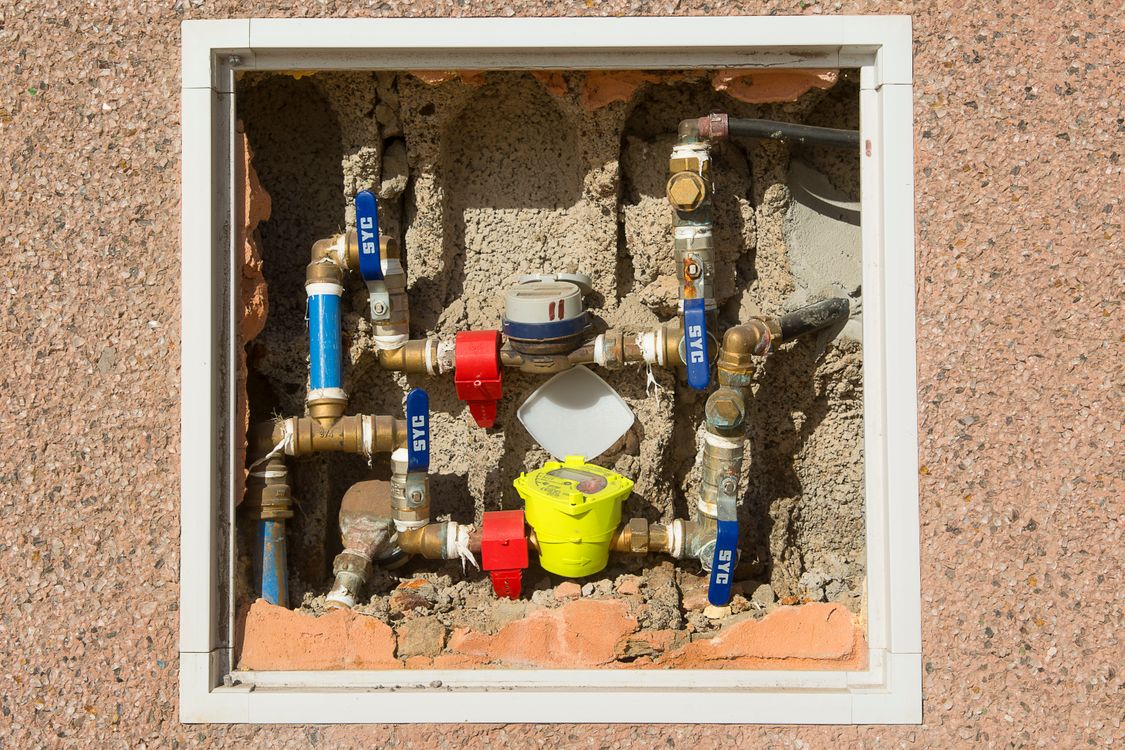
The water meter test quantifies your loss rate before you call anyone. With all fixtures off, a meter moving at a rate of 1 gallon per minute indicates a leak losing 1,440 gallons per day — a major emergency, not a maintenance item.
The Real Cost: Beyond the Water Bill
Wall cavity leaks introduce moisture to wood framing and insulation. Mold colonization begins within 24 to 48 hours of initial wetting under typical indoor temperature conditions. The mold remediation and drywall replacement from a six-month undetected wall leak routinely costs $3,000 to $12,000 — far exceeding the wasted water cost.
The escalation is predictable: a $200 water bill increase over 3 months masks a leak causing $8,000 in structural damage. This is why the water bill is a lagging indicator, not the primary damage signal. By the time the bill is conspicuously high, the leak has typically been active long enough to cause significant hidden damage.
How to Confirm a Hidden Leak Before Calling
The water meter test is the most reliable first step any homeowner can perform without tools. Turn off all fixtures inside and outside — including dishwashers, ice makers, and irrigation systems. Locate the meter (typically at the curb in a covered box). Note the reading and check the leak indicator — a small dial, triangle, or star on the meter face that spins with any water movement. Wait 15 to 30 minutes. If the meter has moved or the indicator is still spinning, a leak exists between the meter and your home.
This test confirms the existence of a leak but cannot locate it. Professional acoustic or tracer gas detection is the next step to pinpoint the source precisely.
Suspect a leak in your home? Our specialist network covers all 50 states.
(844) 485-0339 — Talk to a Specialist