How Soil Movement Breaks Pipes
Clay soil contains minerals — primarily montmorillonite — that absorb water molecules and expand volumetrically when wet, then contract when dry. In high-shrink-swell clay regions, this seasonal cycle produces vertical and horizontal soil movement of 2 to 6 inches or more at the surface. Buried pipes, embedded in this moving soil matrix, experience the same forces.
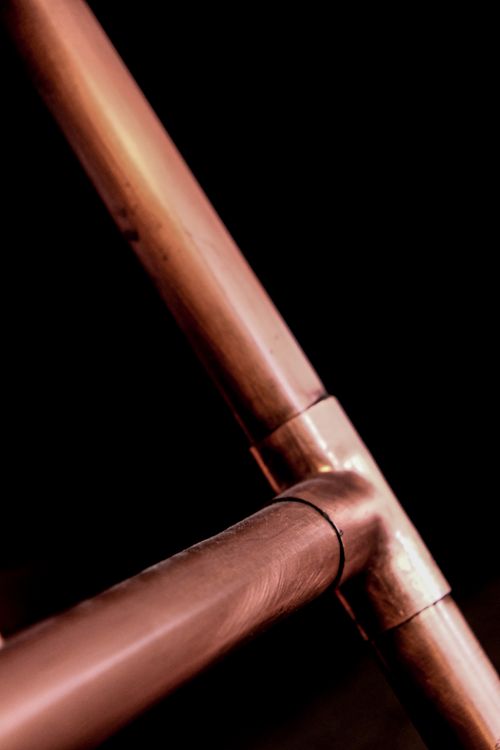
Rigid pipes — copper, cast iron, and concrete — cannot flex with soil movement. Instead, they absorb stress at their weakest points: fittings, joints, elbows, and any section where soil movement is uneven. A copper supply line that crosses the transition between native clay and backfilled soil under a foundation is under continuous mechanical stress every time the soil moisture cycle completes. The result is micro-cracking at stress concentration points — eventually becoming active leaks.
States With the Highest Clay Soil Leak Risk
The USDA soil survey data identifies high-shrink-swell clay soils as dominant across these states and regions:
- Texas — The most significant clay soil leak risk state in the US. The Houston and Dallas-Fort Worth metropolitan areas sit on some of the most expansive Vertisol clay soils in North America. Slab leak rates in these cities are among the highest nationally. Texas homes built before 1980 with copper supply lines under slab foundations are at particularly high risk.
- Oklahoma and Kansas — The Southern Plains states have extensive Vertisol coverage. Oklahoma City and Tulsa both report elevated slab and underground pipe failure rates. Seasonal drought-flood cycles in these states are pronounced, maximizing the shrink-swell stress cycle.
- Louisiana and Mississippi — Gulf Coast clay soils are highly plastic and moisture-retentive. High water tables in these states create a different failure pattern — pipes move upward during wet seasons, then settle during dry periods, fatiguing at joints.
- Georgia and the Carolinas — Piedmont soils contain significant clay fractions. The Atlanta metropolitan area has a documented pattern of copper slab leaks linked to clay soil movement. Stair-step foundation cracks in homes throughout the region are often co-occurring with underground pipe failures.
- California (Central Valley and Bay Area) — California's Central Valley and parts of the Bay Area have extensive clay soils. The combination of dry summers and wet winters creates pronounced shrink-swell cycles. Communities in Fresno, Modesto, and parts of the East Bay experience elevated underground pipe failure rates.
If you live in a high-clay-soil region and your home has copper supply lines more than 20 years old, a proactive leak detection assessment is worth considering — especially if you have not had one in the past 5 years.
Why Clay Soil Leaks Are Hard to Detect Early
Underground pipe leaks in clay soil often don't produce surface moisture for weeks or months. Clay absorbs and holds water — rather than letting it migrate to the surface quickly, clay soil disperses leaked water slowly through the soil matrix. The first visible sign in many cases is a water bill increase, followed eventually by soft or spongy ground in the yard, sidewalk or driveway cracking, or foundation movement.
In some cases, the opposite occurs: dry periods cause the clay to pull water from the pipe breach zone, and the leak actually slows during dry weather — masking the problem. This intermittent pattern makes water bill-based detection unreliable. A meter test during a wet season may show a significant leak; the same test in a dry period may show nothing.
Detection and Repair in Clay Soil
Underground pipe leak detection in clay soil regions typically uses acoustic correlation for metallic pipes and tracer gas for PEX or PVC service lines. The acoustic method works by placing sensors at meter and shutoff valve access points and correlating the leak signal between them. In clay soil with high moisture content, acoustic signals travel differently than in sandy soil — trained specialists adjust frequency filtering and correlation parameters accordingly.
Repair options depend on pipe material and access. Service line repairs in clay soil typically involve either spot excavation at the detected leak point or pipe bursting — a trenchless method that fractures the old pipe outward while pulling new pipe through the same bore. Slab leaks associated with clay soil movement are often addressed by rerouting the pipe through the attic or exterior walls rather than repairing it in-place, avoiding future clay soil stress at the same location.
Suspect a leak in your home? Our specialist network covers all 50 states.
(844) 485-0339 — Talk to a Specialist