Why No Single Method Works for Every Leak
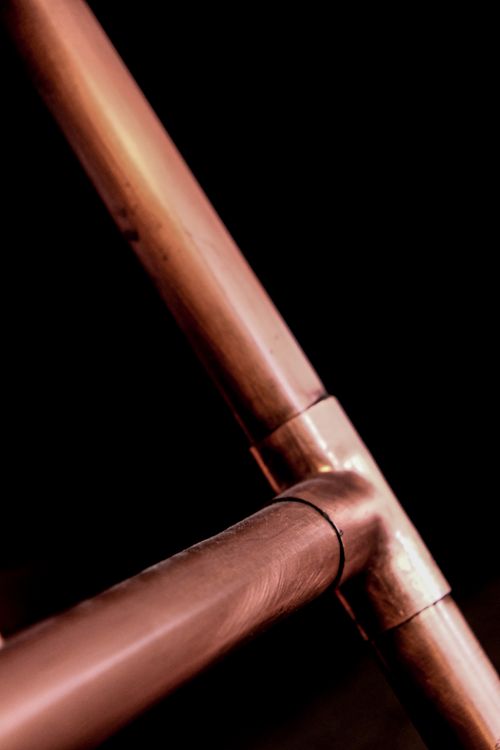
The pipe material under your slab or inside your walls determines which detection method will work. Copper transmits acoustic signals efficiently — acoustic detection on copper can locate a leak to within 0.3 to 1.0 meters. PEX and PVC absorb acoustic signals rapidly, making the same method nearly useless without supplementation. A specialist who shows up with only acoustic equipment and finds PEX is going to need a second trip.
Understanding how each method works helps homeowners know what to expect during a detection appointment, why the specialist recommends the approach they choose, and when a combination of methods is appropriate. It also explains why detection on older copper-pipe homes is faster and less expensive than detection on newer PEX construction.
Acoustic (Electronic) Leak Detection
When water escapes a pressurized pipe through a hole or crack, the turbulent flow generates broadband noise across a frequency range of approximately 100 Hz to 1,200 Hz. This acoustic signal travels through the pipe wall, surrounding soil or concrete, and to the surface. Acoustic detection equipment amplifies, filters, and analyzes this signal to identify where it is strongest — and therefore where the leak is located.
The most sophisticated version is leak correlation. Two sensors are placed at pipe access points on either side of the suspected leak zone. Both record the acoustic signal simultaneously. Because the leak signal travels to the nearer sensor first, the time delay between the two readings — combined with the known speed of sound in that pipe material — allows the equipment to calculate the precise leak location mathematically. On copper pipe, this method achieves accuracy within 0.3 to 1.0 meters under a slab.
- Best for — Copper, cast iron, galvanized steel pipe — any metallic supply line under a slab or buried underground.
- Accuracy on metallic pipe — ±0.3 to 1.5 meters depending on burial depth, pipe diameter, and background noise.
- Accuracy on plastic pipe — ±1.0 to 3.0 meters or unreliable — acoustic signals attenuate rapidly in PVC, PEX, and HDPE.
- Typical cost — $150 to $300 for residential acoustic detection.
Acoustic detection requires an active, pressurized leak. It cannot detect drain line leaks or leaks in depressurized pipes.
Thermal Imaging
Thermal imaging cameras detect surface temperature differences. When a hot water line leaks beneath a slab or inside a wall cavity, the escaping hot water transfers heat upward or outward — creating a temperature differential visible to a thermal camera. Cold water line leaks can create the opposite effect in some slab conditions.
Thermal imaging identifies the temperature anomaly caused by moisture spread, not the leak point itself. The warm area on a thermal scan may be several feet from the actual pipe breach, as water migrates through concrete and materials before affecting surface temperature. This makes thermal imaging most useful for confirming a moisture zone after acoustic detection has narrowed the area — not as a standalone leak location tool.
- Best for — Confirming hot water line leak zones; identifying moisture spread area for remediation planning; post-repair verification.
- Limitations — Cannot detect cold water line leaks reliably; shows moisture spread, not the precise breach point; ineffective on insulated slabs.
Tracer Gas Detection
Tracer gas detection introduces a safe, non-toxic gas mixture — typically 5% hydrogen in nitrogen — into the pressurized pipe under test. The gas escapes from the leak point and rises through soil and slab material to the surface. A sensitive handheld gas detector sweeps the floor surface to identify where the tracer gas is emerging, directly marking the leak location.
Tracer gas is the preferred method for plastic pipe where acoustic detection is unreliable. It is also used when acoustic signal is too weak due to deep burial, when pipe runs are short (limiting correlation spacing), or when multiple potential leak zones need to be isolated. The hydrogen-nitrogen mixture is completely safe — hydrogen at 5% concentration is well below the flammability threshold of 4% in air, and nitrogen is inert.
- Best for — PEX, PVC, CPVC, HDPE pipe — any plastic supply line where acoustic attenuation limits correlation accuracy.
- Accuracy — Typically within 0.1 to 0.5 meters when gas rises clearly through the substrate.
- Typical cost — $250 to $400 due to additional equipment and gas introduction time.
- Limitation — Requires pipe pressure isolation; porous or fractured slabs can cause gas to diffuse, reducing accuracy.
How Methods Combine in Practice
On complex jobs — a suspected slab leak under a large post-tension slab, or a leak in a mixed copper and PEX system — specialists often use acoustic detection first to narrow the zone, then tracer gas to confirm the exact point. Thermal imaging may be used after repair to verify the temperature anomaly has resolved.
When you call for a detection appointment, telling the specialist your home's approximate construction year and pipe material (if known) allows them to bring the right equipment. Homes built before 2000 with copper supply lines typically require only acoustic equipment. Homes built after 2000 with PEX supply lines will almost always require tracer gas.
Suspect a leak in your home? Our specialist network covers all 50 states.
(844) 485-0339 — Talk to a Specialist